You've upgraded everything in your lab. Your sterilization workflow is still the bottleneck.
You invested in a flow hood. You learned to pour consistent agar plates. You've got your pressure cooker dialed in. But every sterilization cycle still requires the same manual choreography: pick up the scalpel, hold it in flame, wait for it to glow, find somewhere safe to cool it, then get back to work. With both hands tied up managing fire.
Or maybe you've already tried another induction sterilizer — one that requires a foot pedal or a button press every cycle — and discovered that "better than a flame" and "actually hands-free" are different things.
The LabRat is what a hands-free induction sterilizer actually looks like.
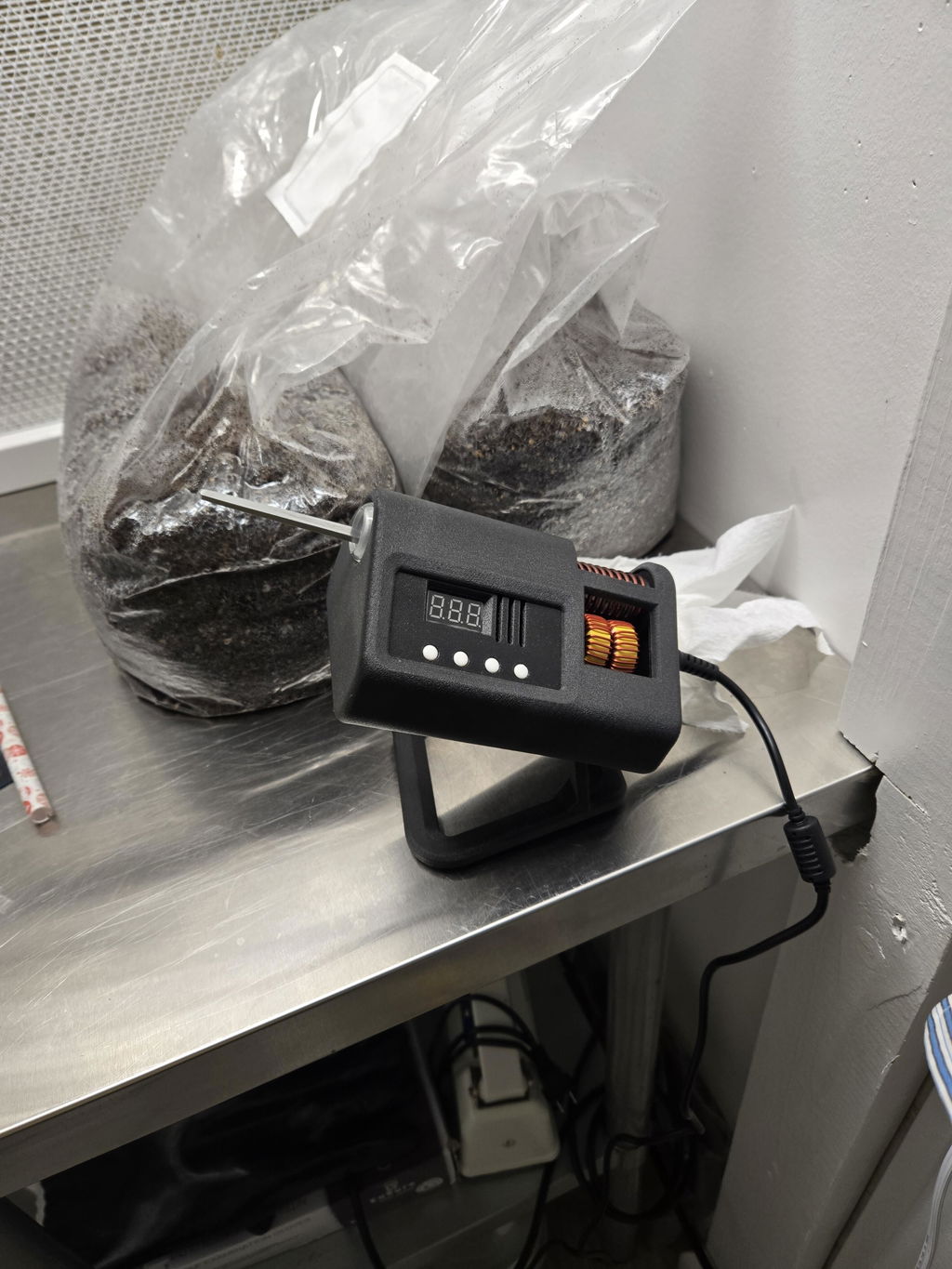
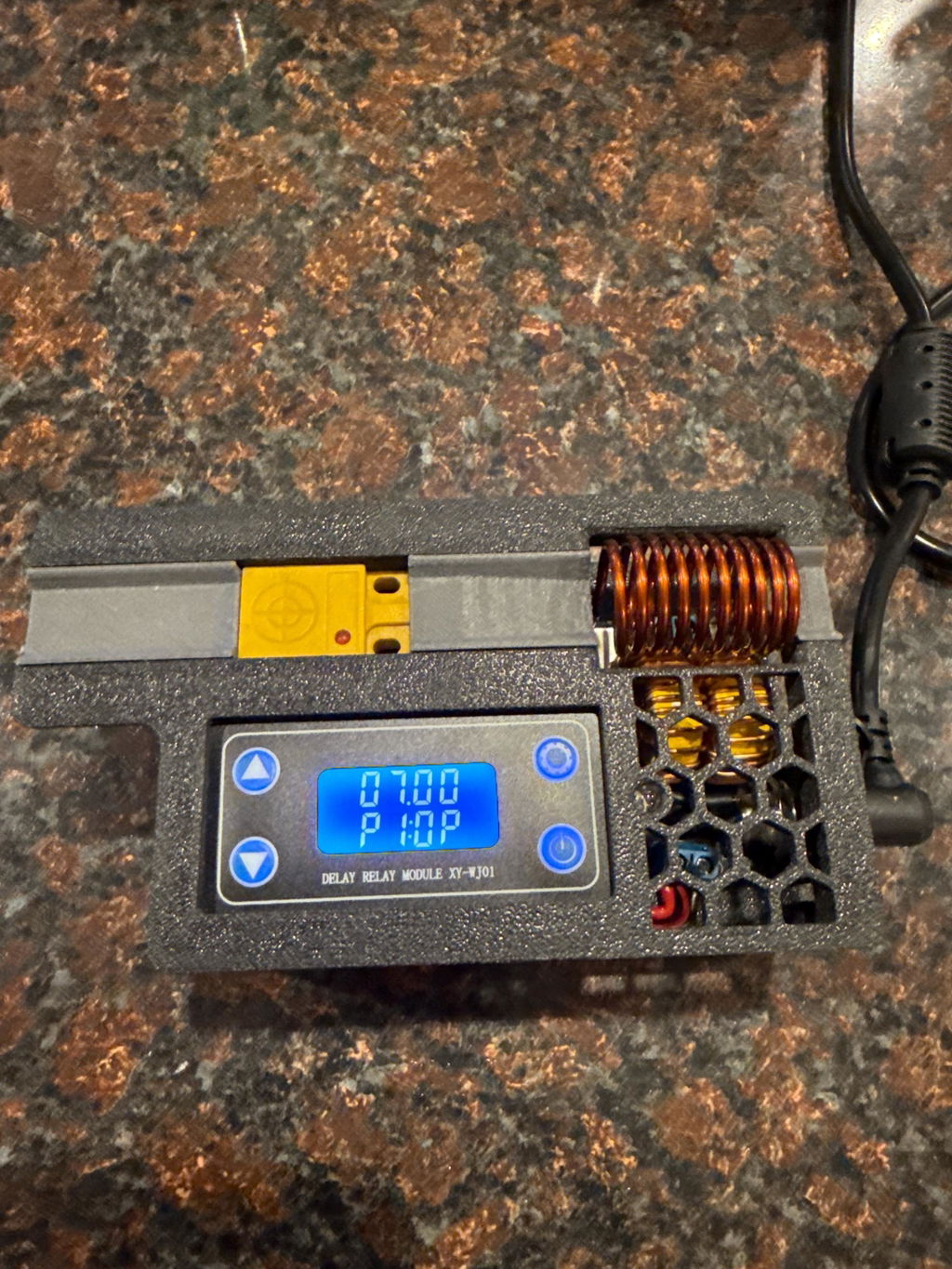
Place your ferrous metal instrument in the angled tool slot. The proximity sensor detects it, starts a 7.5-second sterilization cycle, and shuts off automatically. The tool stays parked in the enclosed housing, protected and ready, until you reach for it again. You don't press anything. You don't hold anything. You don't wait around.
Both hands stay on your work from the moment you set the tool down to the moment you pick it back up — sterile.
How the LabRat Works — and Why Each Part Matters
Fully Automated Proximity Sensor — Tool-Triggered Cycles
An inductive proximity sensor detects ferrous metal within approximately 5mm. When you place your scalpel or loop into the tool slot, the timed cycle begins immediately. When the cycle completes, it stops. No button. No foot pedal. No hand wave to trigger a PIR sensor. The system only activates for instruments the induction coil can heat — a carbon steel scalpel blade triggers it; your hand near the slot does not.
Why this matters: Every competing sterilizer that calls itself "automated" still requires a physical trigger — a button you press, a pedal your foot holds, or a motion sensor aimed at your hand rather than your tool. The LabRat's sensor reads the instrument itself. That's the difference between "semi-automated" and actually not needing to do anything beyond placing your tool.
Enclosed Housing — Reduced Exposure Between Uses
The LabRat's enclosed housing surrounds the tool slot on all sides except the entry face. When your scalpel is parked between transfers, it rests inside that enclosed space rather than in an open slot. This reduces the surface area exposed to ambient air while the tool waits.
Why this matters: For growers doing extended sessions — 30, 50, 80 plates — the time between each transfer adds up. A tool resting in an enclosed space has less exposure than one sitting in an open holder. For serious agar work where every detail matters, the enclosed housing adds a layer of protection between cycles that an open design doesn't provide.
22.5-Degree Angled Face and Insert
The LabRat's face — the entry point where you insert and withdraw your tool — is set at a 22.5-degree angle. The tool insert inside is angled to match. This positions your scalpel at a natural wrist angle relative to your bench height, so placing and retrieving the tool requires minimal wrist rotation compared to a straight-on vertical or horizontal insert.
Why this matters: During a long agar session, the insert-and-retrieve motion happens dozens of times. An ergonomically angled entry means less cumulative wrist strain and more natural hand positioning for continuous work. It's a small detail that matters more at session 40 than at session 4.
Pre-Set 7.5-Second Cycle — Fully Programmable
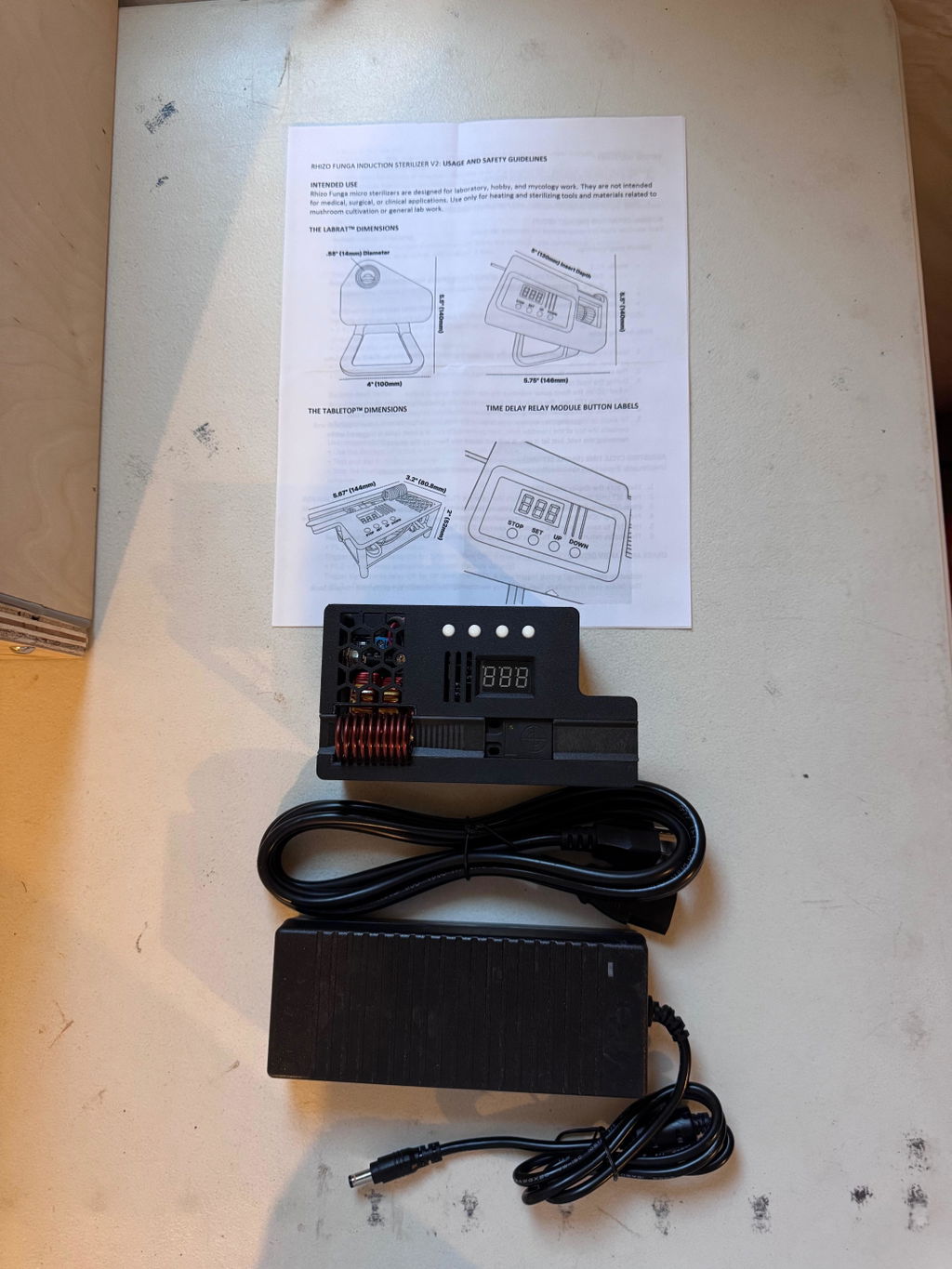
The LabRat ships ready to use, pre-programmed to 7.5 seconds — optimized for a standard #11 blade on a #3 handle. Plug it in and it works immediately. If you use heavier instruments, larger loops, or multiple tool types, the solid-state time-delay relay is reprogrammable via built-in buttons. The range is 0.1 to 999.9 seconds.
Why this matters: Scalpel sterilization requires 5–8 seconds. Fixed long-cycle timers waste time every cycle. The LabRat's default is tuned to what you're actually using, and the full programmable range means it adapts to other instruments without any limitations.
Built-In Safe Haven for Your Tool Between Transfers
The LabRat holds your scalpel between every use. During the parafilm step, during labeling, during preparing the next plate — your tool is inside the LabRat, in its enclosed slot, resting safely. When you reach for it, it's been through a full sterilization cycle since you put it down. Both hands were free the entire time.
Why this matters: The tool-parking problem is one of the most underappreciated friction points in agar work. Where do you put the scalpel when you need two hands? On a clean surface that may not stay clean? In a separate holder that adds another object to manage? The LabRat is the scalpel holder and the sterilizer — one item, one surface, zero extra decisions.
No Flame — Safe for Any Sterile Work Environment
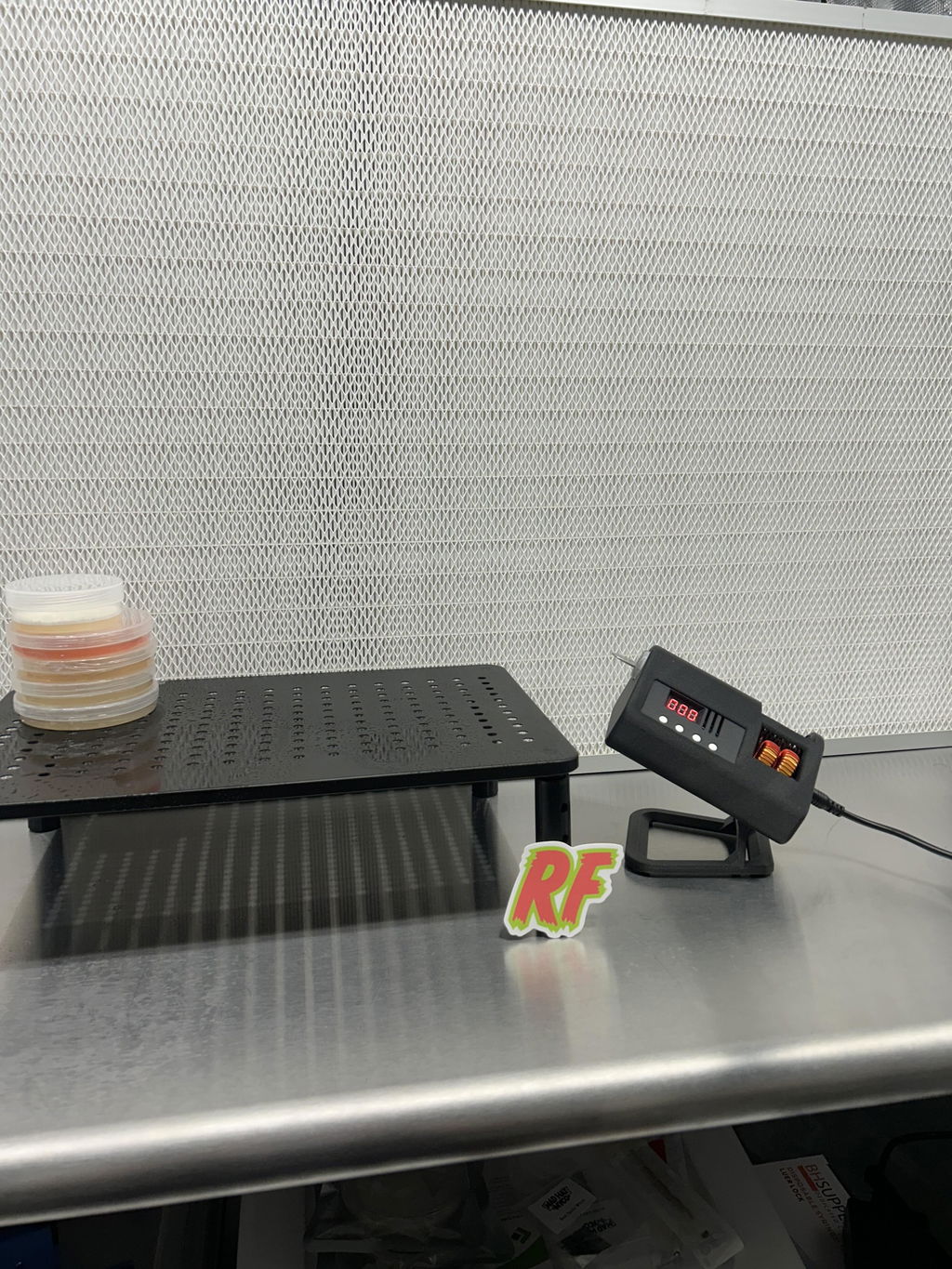
Induction heating generates heat through electromagnetic induction in the metal tool itself. Nothing else heats. No combustion, no convection column, no fire risk. The LabRat is safe to use inside a still air box, produces zero airflow disruption alongside a laminar flow hood, and eliminates every fire hazard associated with operating near isopropyl alcohol.
Why this matters: If you've invested in a flow hood, you paid for laminar airflow. An open flame inside that environment produces a rising heat column that disrupts the horizontal air curtain your HEPA filter is maintaining. The LabRat produces no convective plume, no heat output beyond the tool itself, and no interference with your hood. This isn't a minor convenience — it's the correct tool for that environment.
Modular, Serviceable Construction
The LabRat is built from ABS-GF and PA6-CF — glass fiber reinforced ABS and carbon fiber reinforced nylon — engineering-grade filaments selected for heat resistance and mechanical stability. Assembly uses stainless steel fasteners and brass heat inserts. Every major component is replaceable with a screwdriver and hex key. The timing control is solid-state and MOSFET-based.
Why this matters: A sterilizer lives on your bench through hundreds of sessions. Build quality matters. Modularity matters more — if any component ever needs attention, you can service it. This is a tool built to last and designed to be maintained, not replaced.
Who Is the LabRat For?
Flow hood owners doing regular agar work
If you're running 20+ plates per session in front of a flow hood, the LabRat's enclosed housing, ergonomic angle, and hands-free automation are designed for that workflow. No flame disrupting your laminar flow. No manual triggers breaking your rhythm. Place the tool, close the plate, label, parafilm — all with both hands — and pick up a sterilized scalpel when you're ready.
Growers who want enclosed tool storage between transfers
The LabRat's housing surrounds your parked tool on all sides except the entry. For growers who want maximum protection for the scalpel while it's resting, the enclosed design offers more coverage than an open slot. This is the primary reason some growers choose the LabRat over the FlatTop.
Ergonomics-focused lab workers
The 22.5-degree angled insert is a specific design decision for extended sessions. If you're placing and retrieving your scalpel 40–80 times in a single sitting, the angle makes a difference in wrist fatigue and natural hand positioning. Small details accumulate in long sessions.
Growers upgrading from foot pedal or button-based induction
If you already use an induction sterilizer and still have to press something to start a cycle, the LabRat's proximity sensor represents the actual hands-free upgrade. It's not a modest improvement in convenience — it's a different category of workflow.
Microbiology, tissue culture, and research lab applications
The LabRat's automated, consistent, programmable cycle makes it applicable beyond mycology for any sterile work involving ferrous metal instruments. Tissue culture environments, small research labs, and educational setups benefit from the same workflow properties.
Every Review Is Five Stars. Zero Warranty Claims.
Rhizo Funga has sold 75+ sterilizers across Shopify, Etsy, eBay, and TikTok Shop. Ten customers have left reviews — all of them five stars — and not one warranty claim has been filed. Small numbers, but honest ones. Built and serviced in Whitefish, Montana. Not outsourced, not assembled from commodity kits. Made by hand in small batches with attention to fit, finish, and function.
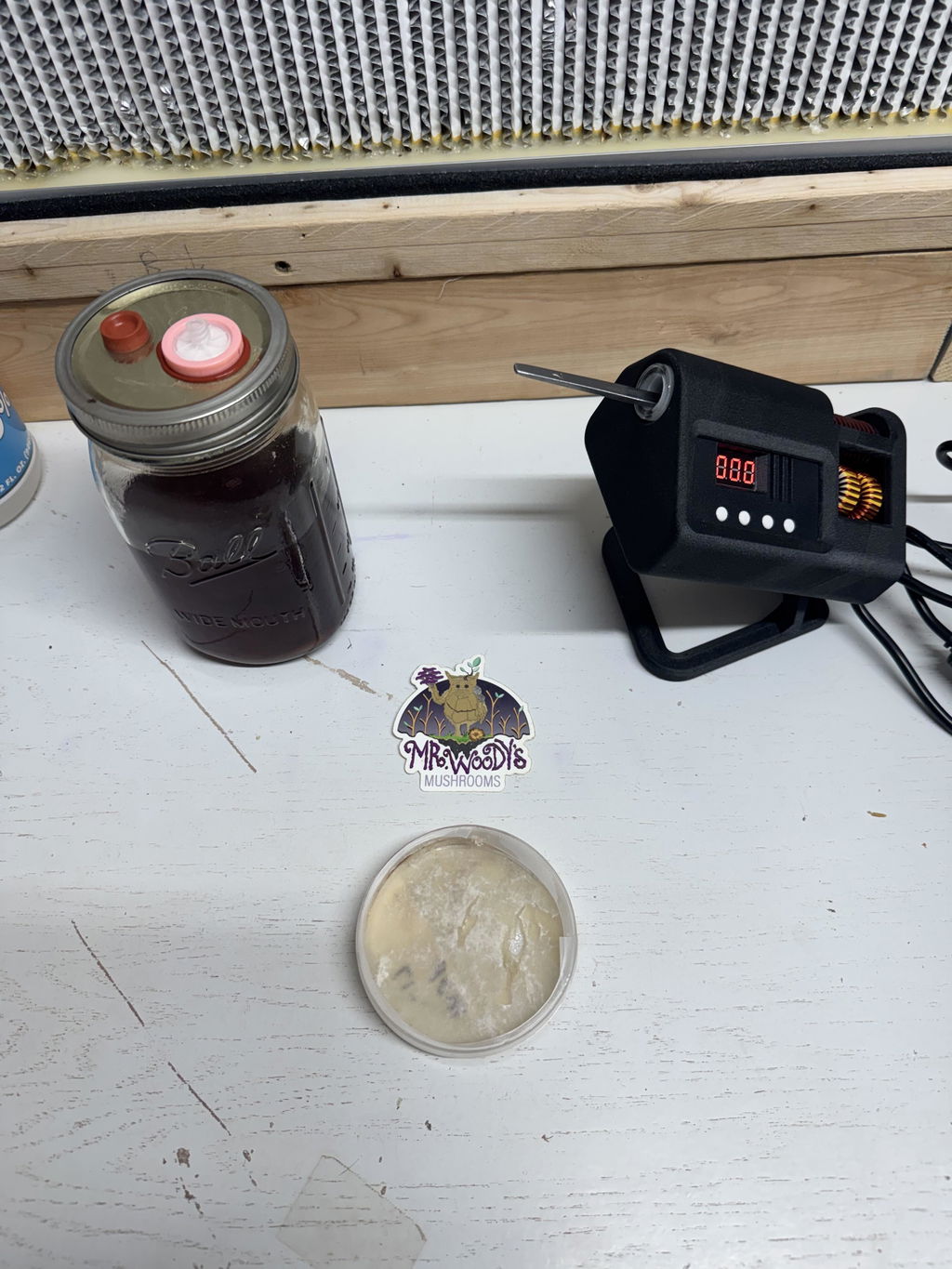
"Oh, this thing just made the job so much easier instead of using a torch and leaving black residue on your plates and everywhere else. I'm glad I found this quality product.. nice work!!!"
— Mr. Woody's Mushrooms
What Makes the LabRat Different
True proximity sensor automation — not motion detection, not button presses. Some induction sterilizers use PIR (passive infrared) motion sensors that activate when you wave your hand past them. That detects you — not your tool — and typically triggers a fixed 20–30 second cycle. The LabRat's inductive proximity sensor specifically detects ferrous metal within 5mm. It activates when the tool you can actually sterilize is present. That's precise automation, not approximate detection.
Programmable timing matched to your instruments. Fixed-cycle sterilizers run the same duration regardless of what's in them. The LabRat ships at 7.5 seconds — the right time for a standard scalpel — and lets you adjust precisely for heavier or lighter instruments. No over-heating, no under-heating, no guessing.
Enclosed housing for growers who want it. The open-design FlatTop is the better choice for maximum tool compatibility and fastest cleanup. The LabRat trades those properties for an enclosed environment and the ergonomic angle. Both make sense — the difference is your workflow and preference.
Not a $30 DIY kit. Not clinical lab pricing. Building a basic induction heater from components costs $30–50 and results in a manual device with no automation, no warranty, and no enclosure. Professional infrared sterilizers for clinical labs run $450–$600 and weren't designed for scalpel work. The LabRat is purpose-built for this application and built to last.
Backed by a real warranty. Made in Montana. One year, no conditions. If anything goes wrong, Rhizofunga sends parts or handles the repair. There are no corporate layers between you and the person who built it.